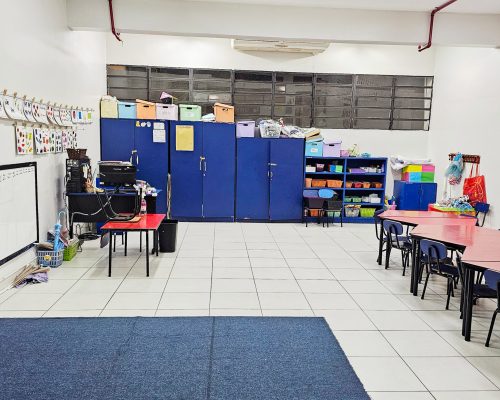
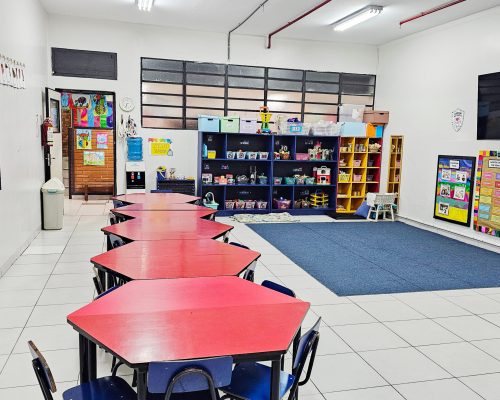
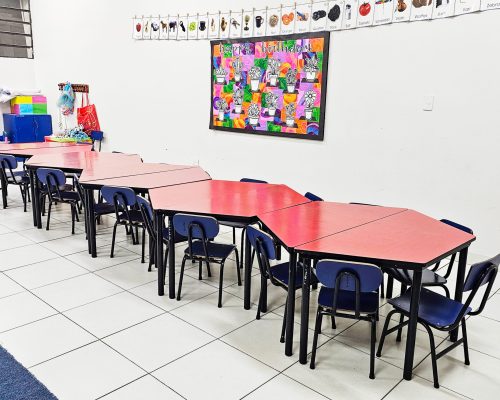
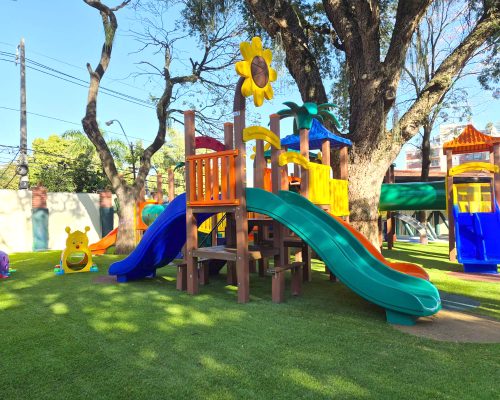
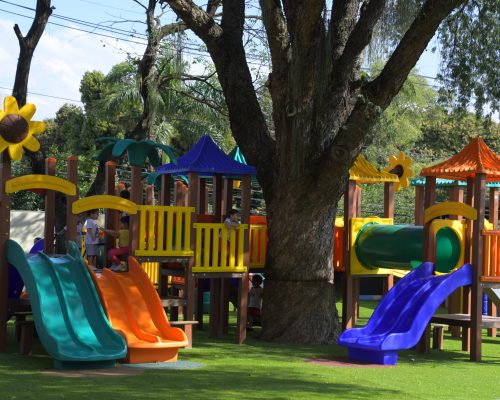
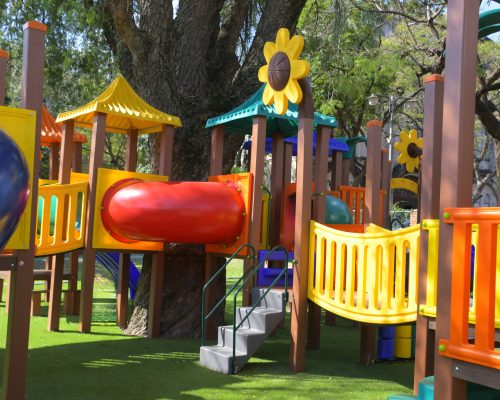
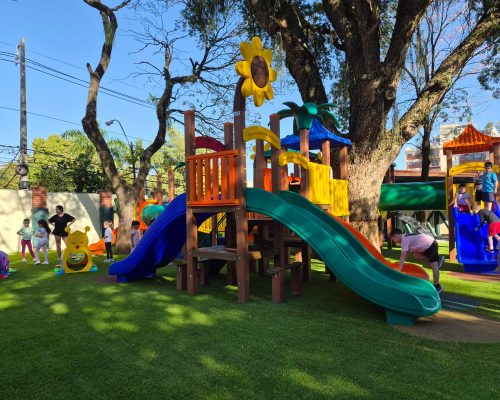
INITIAL EDUCATION

The purpose of Initial Education is the holistic development of the child, by stimulating an effective and timely manner, taking into account the characteristics of the evolutionary development, past experiences, and the potential; with a view to the fulfillment of the vision and mission of the International School.

The full development of the capacities and potential largely depends on the appropriate guide from the early experiences of learning. It is for this reason that the role of parents is critical, as the first educators of their children.

The use of this prior knowledge and experiences that children possess, are the tools that teachers use to guide the child in the construction of their learning.

The learning is built among all, in all time, space and situation.

This material was prepared with the aim of presenting the objectives of each dimension to work with the students from the institution, with suggestions on how they can work from home, and other educational spaces, to accompany and enjoy the achievements of their children.

We present the current pedagogical International College (the “Socio-Constructivist” approach to “Humanistic and Christian.”

The swiss psychologist Jean Piaget stated that “intelligence activity,” and this is observed with greater intensity in the learning of the early years. We participate together in this important process.

Pedagogical Approach


The pedagogical approach of the school is based on the vision of the socio-constructivist learning and the humanistic vision and the christian life. This vision emanate our educational practices.

What is the vision of the socio-constructivist learning?

This vision of education understands that children learn in the interaction with the environment, people, objects, language, and experiences where they grow. As they interact in their environment (home, school, and community) are developing concepts, developing their skills and their understanding of the world around them. The more rich and meaningful are the educational environments and experiences that they offer, the greater their learning and development in each of the areas of life.

The vision of the socio-constructivist considers the language a fundamental tool for the development of cognitive processes. If the language in the environment in which it grows a child is simplistic, this will think so simplistic, but if the language of the environment contains complex concepts and varied, the child will learn to think in a complex and varied. The language of the environment and the individual experiences determine the growth of their intellectual development. For this reason, it is of utmost importance to create educational environments that are linguistically enriched and offer many significant experiences with oral and written language.

The child is the protagonist of their own learning. The teachers are the facilitators of tools, to plan, organize, lead and guide you.

What is the humanistic vision-christian education?

The humanistic vision values the experience of the person as a complex whole. Consider the dimensions of emotional, social, physical, intellectual, and spiritual. Respects the diversity of races, creeds, thoughts, ideologies, etc, and stimulates autonomy. Looking to answer the question “how to live fully.” The goal is to enrich the potentialities and the total being of the person. To do this, the humanistic vision emphasizes life lessons that help children to develop attitudes and to “know how to be”.

What it seeks to achieve with this approach?

Through this educational approach, children develop the critical thinking and reflective, and the creativity, independence and autonomy, the ability of leadership, the ability to interact with others and to solve various problematic situations in your daily life.

Children learn with pleasure, enjoy learning, playing, investigating, and exploring. Learn to learn.

Academic Program

The k 3 and k 4 are equipped with a full immersion into the English language and a once a week special classes of physical education, music and christian education. While the kinder 5, with the partial Immersion into the English language as it also emphasizes the Spanish language, and within the week of the special classes of physical education, music, christian education, and guarani.

Pedagogic Areas


SOCIO-AFFECTIVE

What the child is going to develop gradually:

  • Positive self-concept of himself as a unique individual created by God.
  • Skills to identify and express their emotions.
  • Strategies to overcome the everyday situations of conflict.
  • Autonomy in their actions, in the care of their personal hygiene, the use of materials, and in their conduct.
  • Social skills to interact positively with others.
  • I appreciate for your own story, your family, your community and the culture of their country.
 
How do we work and the socio-affective?

The socio-affective what we work across all areas through experiences both spontaneous and planned during the games, the corners of teaching, the patio, the reading of stories, dramas, and activities in artistic expression.

DDEVELOPMENT OF ORAL AND WRITTEN LANGUAGE

What the child is going to develop gradually:

  • Ability to actively listen and express themselves orally.
  • Enjoy the reading of various literary genres as a source of reflection and pleasure.
  • Understanding of the conventions of the written language, such as:
    • The written language communicates a message.
    • The language printed is organized from left to right and top to bottom.
    • The spoken word represents the written word.
    • The letters represent the sounds of spoken language (the spoken word).
    • The concept of letters, words, and prayer.
    • The words are separated by spaces.
    • The beginning and the end of a word.
    • The details of the shapes of the letters.
    • The sequence of letters in a written word represents the sequence of sounds in the spoken word.
  • Ability to identify the letters of frequent use (by its sound, name or by analogy with a word).
  • Ability to read words of frequent use.
  • Writing spontaneous simple words.
  • Confidence in your abilities as a reader and producer of texts.
 
How do we work on the development of the language?

The proposals of activities emphasize the use of oral language and written with real purpose, within meaningful contexts.
In the moments of meetings in the classroom, the children share and express their experiences, needs, ideas, feelings and opinions on various topics. Listen to a variety of children's literature of different genres and in dialogue about them. Play with sounds, letters, words, songs, and rhymes. Reading words of frequent use in posters and big books accompanied by the teacher. Written in the form a collective and spontaneous in the corner of reading and writing.


LOGICAL DEVELOPMENT – MATHEMATICAL

What the child is going to develop gradually:

  • Ability to solve simple problems of daily life through the logical reasoning mathematical.
  • Concept of number:
    • Count, recognize and name objects.
    • Represent and order numbers and amounts (up to 10).
    • To separate and form numerals (up to 10).
    • Skills to trace the numerals following the directionality.
    • Set in set relations: more than, less than, or equal to.
    • To solve problems of addition and subtraction up to by the numeral 10 using concrete objects.
  • Ability to describe objects according to their shapes.
  • Ability to observe, describe and compare objects according to their characteristics.
  • Concept of spatial notions.
  • Concept of time and units of measures (yesterday, today, tomorrow, nap, afternoon, evening, week, month, year and days of the week).
 
How do we work in development of logical-mathematical?

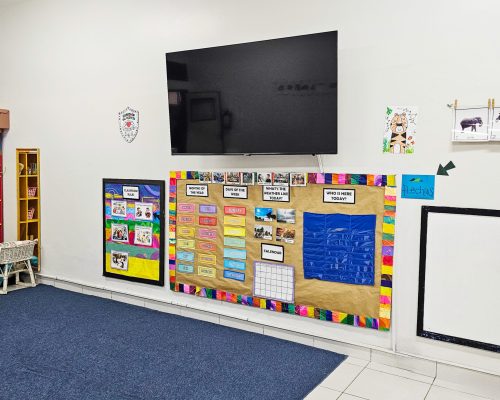
Children learn math concepts using, exploring and playing with concrete materials and teaching in the corner of mathematics. They take advantage of situations of everyday life to solve simple problems through reasoning. In the daily routine, working with the calendar, and the assistance pane, where we emphasize concepts and mathematical skills.

 
DEVELOPMENT OF SCIENTIFIC THOUGHT

What the child is going to develop gradually:

  • Perception through all their senses to describe objects according to their characteristics.
  • Ability to ask questions about the nature and make predictions from their observations.
  • Skills to observe, experiment, measure, classify, compare, and express what they learned.
  • Ability to observe weather.
  • Appreciation for the natural environment.
  • Habits of caring for the environment.


How do we work on the development of scientific thinking?

The children explore, know and appreciate her natural environment through all their senses. Develop scientific thinking through real life experiences and concrete. They take into consideration the questions and interests of the children and their prior knowledge to plan learning experiences and projects to be done in the classroom. Have a corner of sciences where they can observe, manipulate and explore the elements of nature. In addition, guided tours of the museum, in the laboratory, and the ecological park.


DEVELOPMENT OF ARTISTIC AND EXPRESSIVE – ARTISTIC

What the child is going to develop gradually:

  • Appreciation of the beauty of the nature through the use of the senses.
  • Spontaneous expression and creativity of your inner world through music, visual arts, and the body expression.
  • Familiarity with the use of materials, tools, techniques and processes in the arts.
  • Recognition and use of the different visual elements of art (line, color, form, texture, composition).
  • Recognition of different international artists and our country. Their works, styles, shapes, and colors they used in each one of its creations. Vincent Van Gogh, pablo Picasso, Paul Klee, Piet Mondrian, Claude Monet, Vassily Kandinsky, Salvador Dali, Leonardo da Vinci, Frida Kahlo, Ricardo Migliorisi, Carlos Colombino, Jaime Bestard, among many others.
  • Recognition and use of the different visual elements of art (line, color, form, texture, composition).
  • Recognition and use of the different basic elements of music (rhythm, pulse, accent, melody, time, timbre).
  • Appreciation of the arts as a means of communication and expression.
  • Ability to describe and interpret music and visual arts.
 
How to work the physical development and expressive?

This area works offering a diversity of experiences and opportunities to explore, appreciate and express themselves through different expressive media, music, body expression and the visual arts.

In the kinds of music they perform songs in both Spanish and English. Learn rhythm, pulse and lilting accent. In addition, the teachers used in the classroom music instrumental to create a pleasant environment to work and stimulate the imagination.

The expression body works in various spaces through experiences such as: create movements to different music, to represent characters in stories, and explore concepts of the topics worked in class.

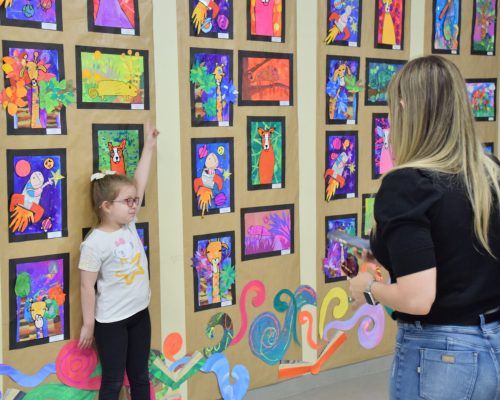
In the visual arts emphasizes the development of the visual arts among which include drawing, painting, and modeling, where it increases the creativity of the child. In addition, it is an opportunity to manipulate a variety of materials and working with a variety of artistic techniques. 

English

SECOND LANGUAGE DEVELOPMENT:
What the child is going to develop gradually:

Kindergarten is a very important educational stage given the ability of children of this age group to acquire and learn a foreign language at a faster pace than their older peers.

Here at ColegioInternacional, we take advantage of this by providing them a safe, fun, engaging, and motiving environment where they can develop different skills in a second language.

Your child will progressively learn:

Ability to interact with others by responding to greetings, compliments, invitations and farewells using courtesy phrases.
Vocabulary (colors, numbers, shapes, sizes, animals, clothes, food, body parts, school supplies, places, people, school and park activities, daily routines, family members, days of the week, Calendar, among others).
Describes people, places, objects, animals and emotions.
Ability to express experiences, ideas, needs, feelings and desires through oral language.
Ability to communicate with their peers in the English language.
Enjoy the language in its different expressive forms: rhymes, readings, poetry, dialogues, songs and stories.
Ask and answer using the following language structures:
Is this...? Yes-No
Where is...? / Who is...? / Who do you...? / Do you like...? / Yes, I do - No, I dont.
How many...? / How much...? / What is this...? /
This is... / Sti... /
Do you...? / Can you...?

Ability to interact with the other responding to greetings, compliments, invitations, and fired using polite phrases.
Vocabulary (colors, numbers, shapes, sizes, animals, clothes, food, basic parts of the body, objects of the school, places, people, activities of the school and the park, daily routines, family members, times of day, calendar, among others).
Describe people, places, objects, animals, and emotions.
Skills for expressing experiences, ideas, needs, feelings and desires through oral language.
Ability to interact confidently in the English language.
Enjoy the language in its different forms of expression: readings, poems, dialogues, songs and stories.
Ask and answer using patterns of language specific:
Is this...? Yes-No
Where is...? / Who is...? / Who do you...? / Do you like...? / Yes, I do - No, I dont.
How many...? / How much...? / What is this...? /
This is... / Sti... /
Do you...? / Can you...?
How do we work on the learning of English?

The learning of the second language is developed through activities and games, songs, stories, modeling, gestures and situations for the actual use of the language within the classroom and other spaces of learning.

Physical Education

PHYSICAL DEVELOPMENT

What the child is going to develop gradually:

  • Healthy habits of personal hygiene and eating.
  • Awareness of their body outline.
  • Perception of their own body in space (forward, back, inside, outside, above, below, beside, on the other side, left, right, near, far, etc)
  • Perception of their body in relation to time (before, after, when, now, before, after, fast, slow, faster than, slower than, at the same time).
  • Gross motor coordination.
  • Ability to use the hands and fingers with greater strength, flexibility, and dexterity (development of fine motor skills).
  • Skills for interacting with others in the experiences of games and sports.
  • Respect your own body and that of others.


How do we work on the physical development?

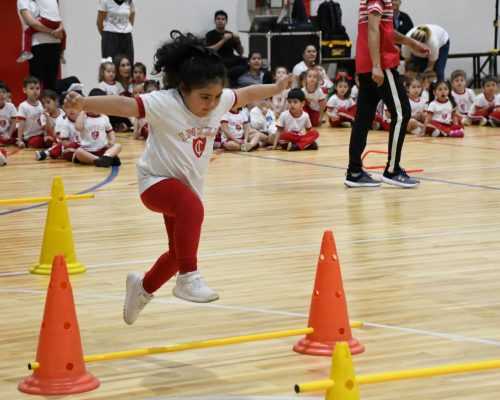
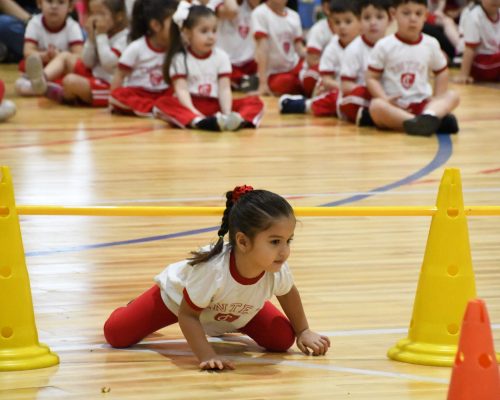
We mainly worked on the acquisition of motor skills, simple and complex, such as jumping, crawling, climbing, climb, throw, bounce, kick, etc, In this type of activity is predominant neuromuscular coordination requiring very little presence of the physical qualities, strength, endurance, and speed.

Christian education and Chaplaincy


CHRISTIAN EDUCATION AND CHAPLAINCY

What the child is going to develop gradually:

  • Principles and christian values.
  • I appreciate and respect towards life, yourself and others.
  • Recognition of a God of love, Creator and Savior.
  • Application of christian principles in daily life.
  • Appreciation and respect for nature as a creation of God.

How do we work for the spiritual development?

Christian values and principles are emphasized in the different activities of the school day. Students are provided with special classes of Education Cristina. In the same, hear bible stories, fairy tales, songs and games valuing the christian principles in their actions. In addition, we offer the chaplain of the level that directs and accompanies the students and teachers in all the activities.